
How to Choose a Commercial Ice Machine Water Filter
A hotel may choose an ice machine with enough capacity for a banquet, then pick a filter because it fits on the wall beside it. The filter still has to supply enough water at the right pressure when the machine fills. Space matters at installation. Water quality, flow and pressure determine which system fits the job.
Start with the ice machine
Record the make, model and type, such as a cuber or flaker. Note its rated ice output and how much ice the site expects to use on a busy day. Check the manufacturer’s requirements for water use, inlet pressure, temperature, pipe size and water quality. If the machine has a separate condenser water connection, identify it separately from the supply used to make ice.
Check what else draws water from the same line. A hotel’s banquet and bar teams may need ice at the same time. In a restaurant or QSR, the ice machine may fill while other beverage equipment is drawing water.
Check daily water use and peak flow
- Daily water use, in litres per day, helps plan cartridge changes. Use measured water use or the manufacturer’s water consumption figures. Include any water the machine discards during a cycle if the figures have yet to account for it. Compare daily use with the filter’s rated capacity, which is the total volume the system is rated to treat under stated conditions.
- Peak flow, in litres per minute, helps size the system. Check how much water the ice machine needs while filling and add the demand from equipment that may draw from the same treated line at the same time. Compare that figure with the filter system’s maximum service flow.
A cartridge rated for more litres can still have the same service flow. If the pipe is too narrow or the supply pressure is low, choose a solution that addresses that restriction.
Measure pressure while the machine fills
Dynamic pressure is the pressure available while water is flowing. Measure it at the machine inlet during a fill, with the relevant shared equipment running. Pipe size and length, valves, fittings, the main filter and any prefilter can all affect the pressure that reaches the machine. Allow for additional pressure loss as the cartridges collect sediment.
Check the pressure at the machine against the machine manufacturer’s requirement. Use the filter’s own pressure limits to check the filter installation.
Choose treatment for the water at the site
Check the water that actually feeds the machine. If the site sometimes switches from municipal to tanker water, account for both supplies when choosing treatment.
- Chlorine taste and odour. If this is a concern, check that the exact system is rated to reduce it.
- Sediment. If the supply or pipework carries coarse dirt or rust, consider a prefilter. This catches coarse particles before they reach the main cartridge. It can be a separate unit or part of the selected system. Allow for its pressure drop and leave room to service it.
- Hardness and scale. Test hardness and alkalinity, and record where deposits form and how often the machine needs descaling. Scale inhibition helps manage deposits. If the machine manufacturer specifies a hardness or dissolved-solids limit, assess water softening or reverse osmosis according to the result the machine requires.
Use a potable supply, meaning water that is safe to drink, to make ice. If the supply is unsafe or its quality is unknown, have it assessed before using it. A foodservice filter’s reduction claims cover specific substances and do not establish that the supply is safe to drink.
Where Pentair Everpure Insurice fits
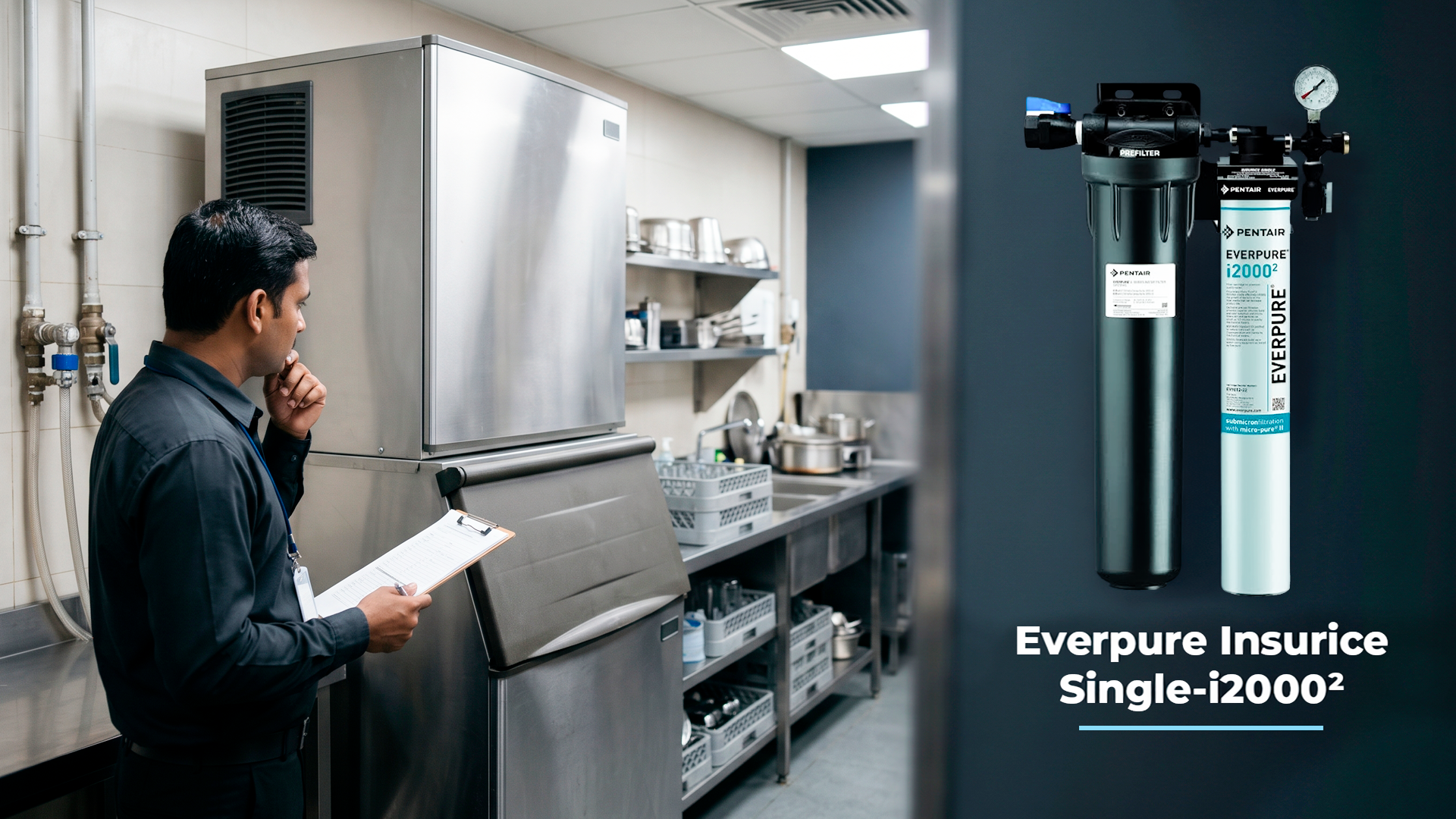
The Pentair Everpure Insurice Single-i2000² System (EV9324-01) is one option for a compatible machine on a dedicated line. Consider it when the water needs the reductions listed for this system and the peak flow is within its rating.
Pentair lists a maximum service flow of 6.3 L/min (1.67 US gpm), a rated capacity of 34,069 litres (9,000 US gallons) and 3/8-inch FNPT inlet and outlet connections. The replacement cartridge is EV9612-22.
For this assembled system, Pentair lists NSF/ANSI 42 certification for chlorine, taste and odour, and nominal particulate reduction, Class I. It lists NSF/ANSI 53 certification for cyst reduction by mechanical filtration. Pentair also reports scale reduction based on its own testing.
If the machine needs more flow, assess a higher-flow configuration or separate lines for the equipment. If coarse sediment is the issue, assess prefiltration. Compare the exact system codes and check each system’s own flow, capacity and reduction claims before approving a quotation.
Plan cartridge changes before installation
Leave enough room to remove the cartridge and reach the shut-off valve. Make provision to flush the cartridge and check for leaks. For the Single-i2000², Pentair calls for vertical mounting with the cartridge hanging down and a full-flow flush at installation and after each cartridge change.
At commissioning, record the installed system and cartridge codes, the pressure during a fill and which other equipment was running. Agree who will stock and change cartridges and who will check the prefilter, if fitted. Use the selected system’s instructions to set replacement dates and decide when an earlier change is needed.
Follow the ice-machine manufacturer’s cleaning and sanitising schedule for the machine and bin, including descaling where specified. This is a separate job from replacing the water filter.
Check the Correct Insurice Fit for Your Ice Machine.