
Hardness-related scale
Hardness minerals can form deposits under relevant temperature and water-chemistry conditions. Correctly selected treatment can help manage that scale risk.
Aquainwent helps hotels, restaurants and commercial kitchens select an appropriate Everpure by Pentair warewashing treatment approach based on source water, hardness, inlet temperature, equipment requirements, peak flow and operating demand.
For hotels, restaurants, bars, QSRs, institutional kitchens, cloud kitchens and new commercial-kitchen projects across India.

Source-water minerals and suspended material can affect deposit formation in warewashing applications. The visible wash result also depends on the machine, temperatures, wash-and-rinse settings, chemical programme, drying and maintenance.
The right commercial dishwasher water treatment is not a universal filter. It is a treatment approach selected around the incoming water, connected equipment, feed temperature, peak flow and the condition that needs to be addressed.
Hardness minerals can form deposits under relevant temperature and water-chemistry conditions. Correctly selected treatment can help manage that scale risk.
Dissolved minerals can contribute to spotting or cloudiness, but water should not be treated as the only possible cause of the finish.
Scale can coat heated water-contact surfaces and affect operating performance, making temperature and water chemistry relevant assessment inputs.
Particulate filtration, scale inhibition, softening and RO perform different jobs. The treatment must match the actual water condition.
Water source, machine type and operating demand can differ between locations, so each configuration should be assessed rather than assumed.
Each symptom needs context. Water testing, equipment data and wash-process checks help separate the visible concern from the treatment decision.
Hardness minerals may precipitate on heated surfaces under relevant conditions.
Scale can coat heated water-contact components and affect operating performance.
Hardness, alkalinity, temperature, machine requirements and operating conditions.
Dissolved minerals may be contributing to visible deposits on washed ware.
Water is one possible factor in appearance, alongside machine, chemistry, drying and maintenance.
Hardness, TDS, wash-and-rinse settings, chemical programme and machine condition.
The proposed treatment may not be rated for the actual inlet-water temperature.
Standard SR-X and hot-feed HTS-11 configurations have different verified temperature limits.
Measured inlet temperature, booster-heater arrangement and the exact Pentair specification.
Visible or fine suspended material may be present in the incoming supply.
Particulate can affect downstream equipment and treatment loading.
Source, turbidity or sediment load, plumbing condition and whether prefiltration is needed.
The installed technology may not address the defined water condition.
A scale inhibitor does not remove hardness or lower TDS, and particulate filtration does neither.
Actual objective, source-water results and the verified role of each treatment stage.
The proposed system may not support simultaneous or peak equipment demand.
Flow, pressure and connection requirements must align across treatment and equipment.
Peak flow, supply pressure, machine data, connections and any concurrent demand.
Municipal, tanker, borewell or blended supplies can differ between sites or over time.
A single standard product should not be assumed to suit every location.
Each source, expected variation and a documented site-specific treatment plan.
Identify whether the supply is municipal, borewell, tanker, blended or already treated, and note expected variation.
Measure relevant hardness to understand mineral loading and potential scale-management needs.
Use total dissolved solids as an indicator of dissolved mineral content, reviewed with hardness and the equipment requirements.
Review where relevant to the water report, deposit behaviour and the equipment manufacturer’s guidance.
Assess suspended material and source conditions that may affect equipment or downstream treatment loading.
Measure the actual feed temperature and identify any booster-heater arrangement before choosing a standard or hot-feed system.
Check static and operating pressure against the selected treatment and the connected equipment requirements.
Use machine data and operating schedules to confirm the required service flow and inform inspection and replacement planning.
Collect the current dishwasher, glasswasher and booster-heater water, temperature, pressure, flow and connection specifications.
Confirm connections, isolation, drainage where applicable, pressure relief, mounting clearance and safe access for servicing.
These technologies perform different jobs. Understanding the distinction prevents a scale inhibitor or sediment filter from being mistaken for hardness removal or dissolved-solids reduction.
HydroBlend scale-inhibitor media is dispensed to help inhibit minerals from forming hard scale in relevant warewashing applications.
Ion exchange removes calcium and magnesium hardness through a different process from filtration or scale inhibition.
RO may be considered when testing and equipment requirements indicate a need for broader dissolved-solids reduction.
Prefiltration can address suspended dirt and sediment before downstream treatment or connected equipment.
Final treatment depends on tested water, machine requirements, feed temperature, pressure, peak flow, wash-process context and site conditions. Assessment is required before confirming a system.
SR-X and Kleenware HTS-11 are scale-inhibitor feeders with different feed-temperature and flow boundaries. Neither removes hardness minerals or reduces TDS.
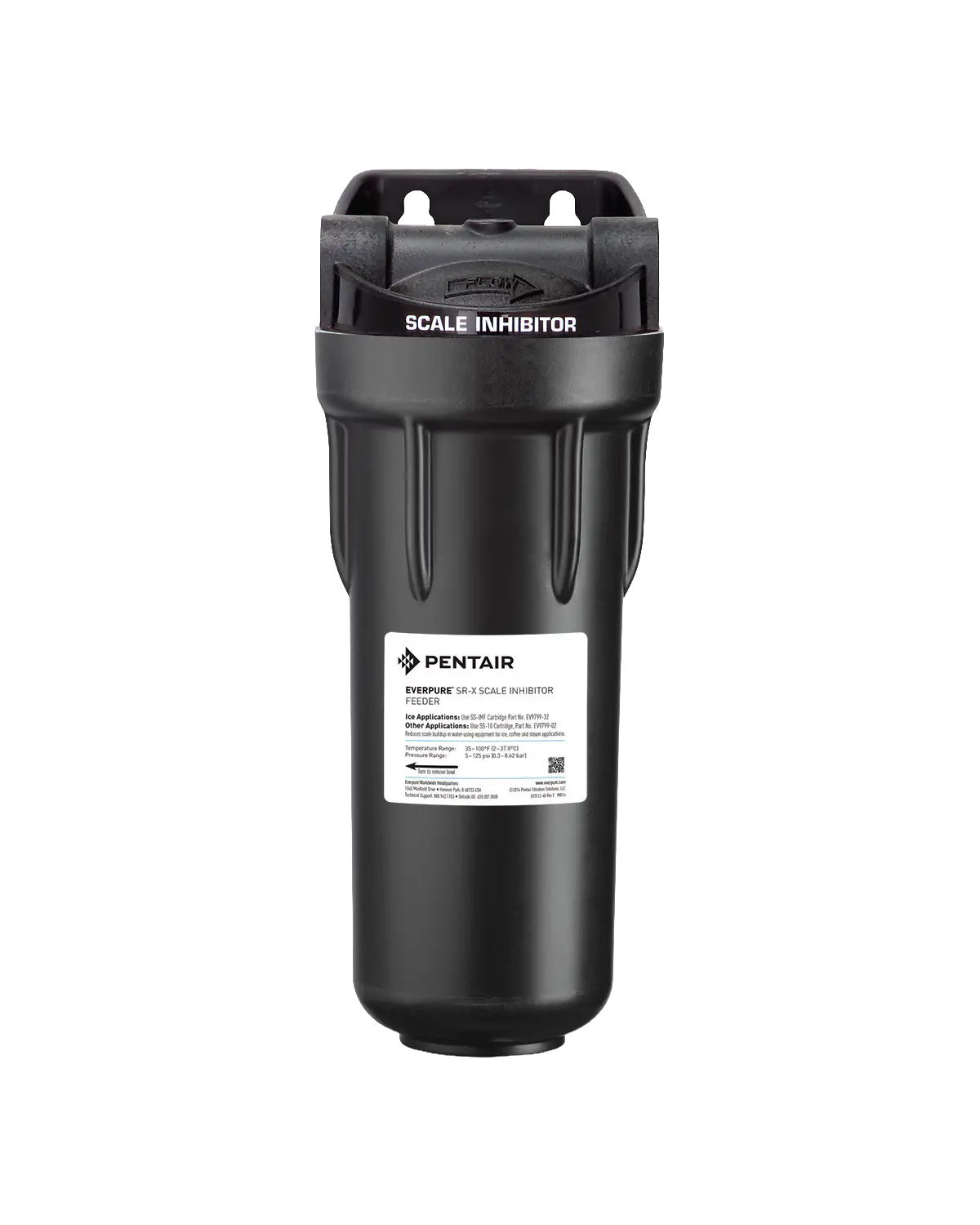
The EV9798-45 feeder uses an SS-IMF HydroBlend cartridge to dispense a controlled scale inhibitor for relevant warewashing feeds within its verified limits. It does not remove hardness or lower TDS.
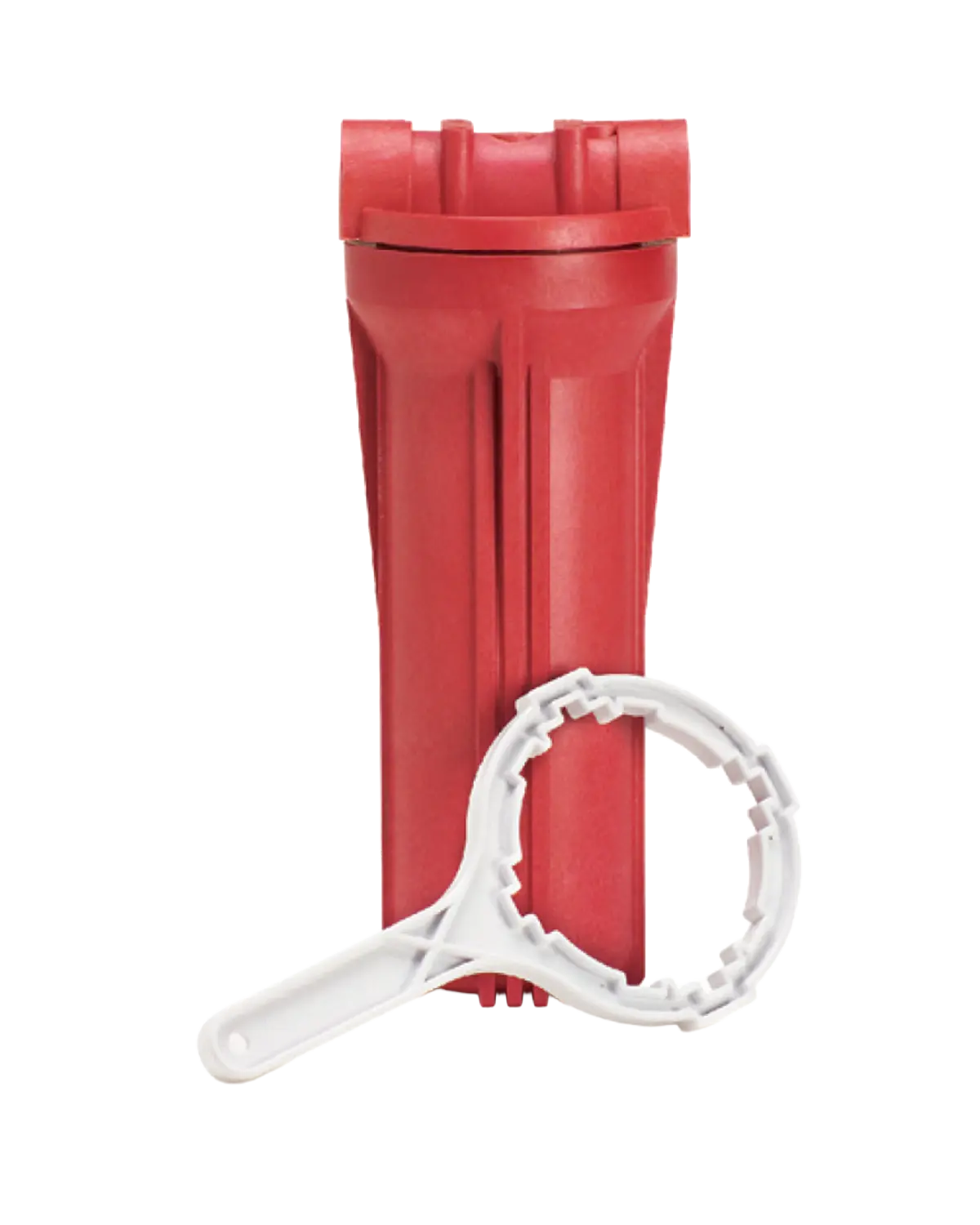
The EV9799-11 system uses an HT-10 HydroBlend cartridge to help inhibit mineral deposits on hot-water feeds serving commercial dishwashers, glassware washers and warewashing booster heaters.
Specifications shown are tied to the listed system and cartridge configurations. Certification scope varies by exact component and is intentionally not generalised here. Final suitability requires water, equipment and site assessment.
SR-X and HTS-11 are connected close to the relevant warewashing feed. The exact model, feed conditions, plumbing, isolation, pressure relief, mounting and service access must be confirmed before installation.
Plan the connected point-of-use installation with a qualified plumber and the applicable Pentair instructions.
Confirm inlet temperature, pressure and peak flow against the exact SR-X or HTS-11 configuration.
Assign trained staff, inspection responsibilities and replacement steps before the system is placed in service.
Cartridge service must follow the applicable Pentair procedure, including local water isolation, depressurisation, reassembly and leak checking. HydroBlend cartridges should be replaced before the media is completely depleted.
These point-of-use statements apply only to the verified SR-X and HTS-11 configurations. Softeners, RO, prefiltration, UV and other engineered systems require project-specific sizing, utilities, installation and commissioning.
The assessment emphasis changes with machine type, feed temperature, source water, peak demand, engineering access and maintenance responsibilities.
Review dishwashers, glasswashers and booster heaters across outlets, banquets and back-of-house areas with engineering access and service ownership.
Match source water, machine feed, peak covers, installation space and the operating team’s inspection and replacement plan.
Assess glasswasher finish concerns with water data, machine settings, chemical programme, drying and peak event demand.
Confirm peak flow, feed temperature and repeatable site procedures without assuming identical water at every location.
Coordinate equipment schedules, utilities, site engineering, planned inspections and approved maintenance responsibilities.
Review multiple warewashing loads, operating windows, shared utilities and whether point-of-use or engineered treatment is appropriate.
Coordinate water testing, equipment schedules, feed temperature, connections, isolation, pressure relief and service access before fit-out.
Build a site-by-site water and equipment profile, then document the selected treatment and lifecycle plan for each configuration.
Aquainwent helps customers select and buy products. A website enquiry does not book a site visit or installation.
Tell us the application, location and any product or equipment details you know.
Our team reviews the requirement against product specifications and any available water readings.
The team can discuss direct supply or connect you with an appropriate dealer and confirm the quotation.
Confirm product availability, delivery and any separately agreed installation or service responsibilities.
Trusted by leading hospitality & foodservice brands


Trusted by 100+ premium establishments across India.
Representative brands and hospitality groups where Everpure® by Pentair solutions supplied through Aquainwent or its dealers have been deployed. Brand names and trademarks are the property of their respective owners and are used for identification purposes only.
Aquainwent LLP is listed in Pentair Asia’s official Distributor/Dealer directory for India under Commercial Filtration & Foodservice.
Concise answers for commercial kitchen operators, project teams and equipment partners.
It treats water feeding a dishwasher, glasswasher or booster heater to address defined conditions such as hardness-related scale, dissolved-mineral deposits or particulate. The treatment mechanism must be matched to the water, feed temperature, equipment and operating demand.
Dissolved minerals can contribute to deposits on glassware. Machine condition, wash and rinse settings, the chemical programme and drying should also be checked before the cause is attributed to water alone.
No. SR-X and HTS-11 use scale-inhibitor media to help manage hard-scale formation; they do not remove dissolved hardness minerals or reduce TDS.
Everpure SR-X EV9798-45 is a scale-inhibitor feeder for relevant commercial warewashing applications with feed water up to 100°F / 38°C and a maximum service flow of 6.0 gpm / 22.7 LPM. Final fit depends on water conditions, pressure, equipment requirements and demand.
Kleenware HTS-11 is designed for hot-water feeds serving commercial dishwashers, glassware washers and warewashing booster heaters. Its verified feed-water limit is 170°F / 76.6°C and maximum service flow is 15 gpm / 56.8 LPM; final fit must be checked against actual conditions.
There is no universal best system. Selection depends on water hardness and TDS, inlet temperature, equipment requirements, peak flow, the treatment objective and site conditions.
Softening may be relevant when hardness removal is required. RO may be considered when testing and equipment requirements indicate a need for broader dissolved-solids reduction. Both require engineered sizing and installation review.
No. Water treatment addresses defined water conditions; the detergent and rinse-aid programme and machine settings should follow the equipment and chemical provider’s guidance.
Compatibility should not be assumed. Feed temperature, pressure, flow, connection sizes, isolation and service access must be checked against the selected system and equipment.
Replacement depends on system type, water usage and media condition. Pentair recommends regular inspection and replacement according to the applicable cartridge guidance; HydroBlend cartridges should be replaced before the media is completely depleted.
Trained staff can carry out cartridge service only when they follow the applicable Pentair procedure, including local water isolation, depressurisation, reassembly and leak checking. Site procedures and responsibilities should be confirmed before service.
Each source water and equipment configuration should be reviewed, followed by a documented treatment, inspection and replacement plan that allows for site-specific conditions.
Ask about a listed product or share your requirement. Our team will review the enquiry and discuss direct supply or an appropriate dealer contact.