
Extraction
Mineral content and overall water chemistry can influence how soluble coffee compounds are extracted during brewing.
Aquainwent helps commercial operators select the appropriate Everpure by Pentair treatment approach based on source water, coffee-machine requirements, operating demand and beverage objectives.
For cafés, café chains, hotels, restaurants, bakeries, QSRs and new coffee projects across India.

Brewed coffee is approximately 98% water. Its chemistry can influence extraction, aroma, flavour, mineral balance and how scale forms inside heated water-contact components.
The right coffee-water treatment is not a universal filter or number. It is a treatment approach selected around the incoming water, the coffee equipment and the beverage objective.
Mineral content and overall water chemistry can influence how soluble coffee compounds are extracted during brewing.
Chlorine taste and odour, excessive dissolved solids or unsuitable mineral balance can affect the sensory character of beverage water.
Both excessive hardness and very low mineral content can require attention, depending on the source water and coffee programme.
Correctly selected treatment can help reduce scale-related stress and maintenance requirements on water-contact components.
More consistent treated-water quality helps reduce one source of beverage variation across multiple locations.
Each symptom needs context. Testing and equipment information help separate the visible concern from the treatment decision.
Disinfectant taste or odour may be present in the source water.
It can affect beverage-water quality and sensory character.
Source, chlorine condition, flow demand and suitable carbon-filtration performance.
Visible or fine suspended material may be entering the equipment.
Particulate can affect water clarity, valves, narrow passages and filter loading.
Water source, turbidity or sediment load, plumbing condition and pre-filtration needs.
Hardness minerals may precipitate on heated surfaces under relevant conditions.
Scale can add stress and maintenance requirements to water-contact components.
Hardness, alkalinity, temperature, machine requirements and operating conditions.
Total dissolved solids may be elevated or may vary with the incoming source.
TDS is one part of the water profile that can influence treatment and beverage decisions.
TDS with hardness, alkalinity, source variability and manufacturer requirements.
Reverse osmosis may leave treated water with very low mineral content.
Some coffee applications require a considered mineral profile after RO.
RO permeate quality, coffee objective and whether post-RO mineral addition is appropriate.
Municipal, tanker, borewell or blended supplies can differ between sites or over time.
One standard product may not produce equivalent treated water at every location.
Each source, seasonal variation and a documented multi-site treatment plan.
The installed treatment may not align with the machine, water profile or demand.
Undersized or unsuitable treatment can fail to address the relevant water condition.
Machine specifications, peak flow, daily volume, utilities, installation and service access.
Identify whether the supply is municipal, borewell, tanker, blended or already treated, and note expected variation.
Use total dissolved solids as an indicator of dissolved mineral content, reviewed alongside hardness and alkalinity.
Measure relevant hardness to understand mineral loading and potential scale-management needs.
Review buffering capacity with hardness because the combination informs carbonate-scale behaviour and beverage-water decisions.
Check the relevant disinfectant condition when taste, odour or carbon-filtration performance is a concern.
Assess suspended material and source conditions that may affect clarity, equipment or cartridge loading.
Use the current manufacturer’s water-quality, pressure, flow, connection and installation requirements for each machine.
Estimate treated-water use from machines, beverages and operating hours to inform capacity and replacement planning.
Confirm simultaneous demand and machine configuration so the selected treatment can support the required service flow.
Different water conditions need different technologies. These pathways explain the role of each approach without assuming that every café needs the same system.
Relevant when particulate, chlorine taste or odour and related beverage-water concerns need to be addressed.
Specific technologies may modify carbonate hardness or manage scale risk, depending on the selected system.
RO may be relevant when testing shows that broader dissolved-solids reduction is needed for the application.
Some coffee applications add mineral content back into RO-treated water to establish a more suitable mineral profile.
Final treatment depends on source water, equipment and beverage requirements. An assessment is required before confirming a system.
These products represent different treatment roles. Product suitability, sizing and final configuration should be confirmed against tested water, machine requirements and demand.
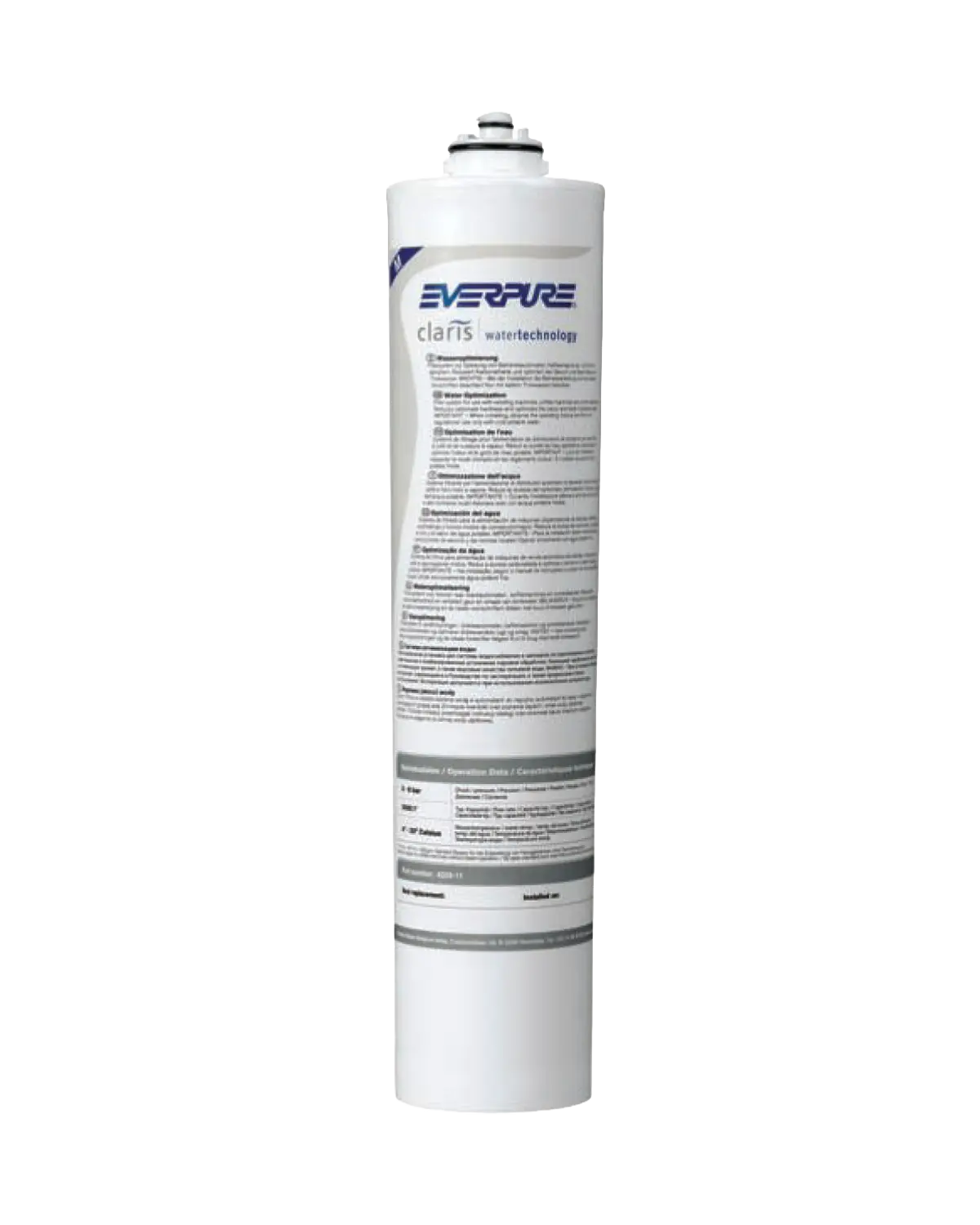
A five-stage point-of-use treatment cartridge with adjustable carbonate-hardness treatment, fine filtration and a carbon block stage for verified hot-beverage applications.
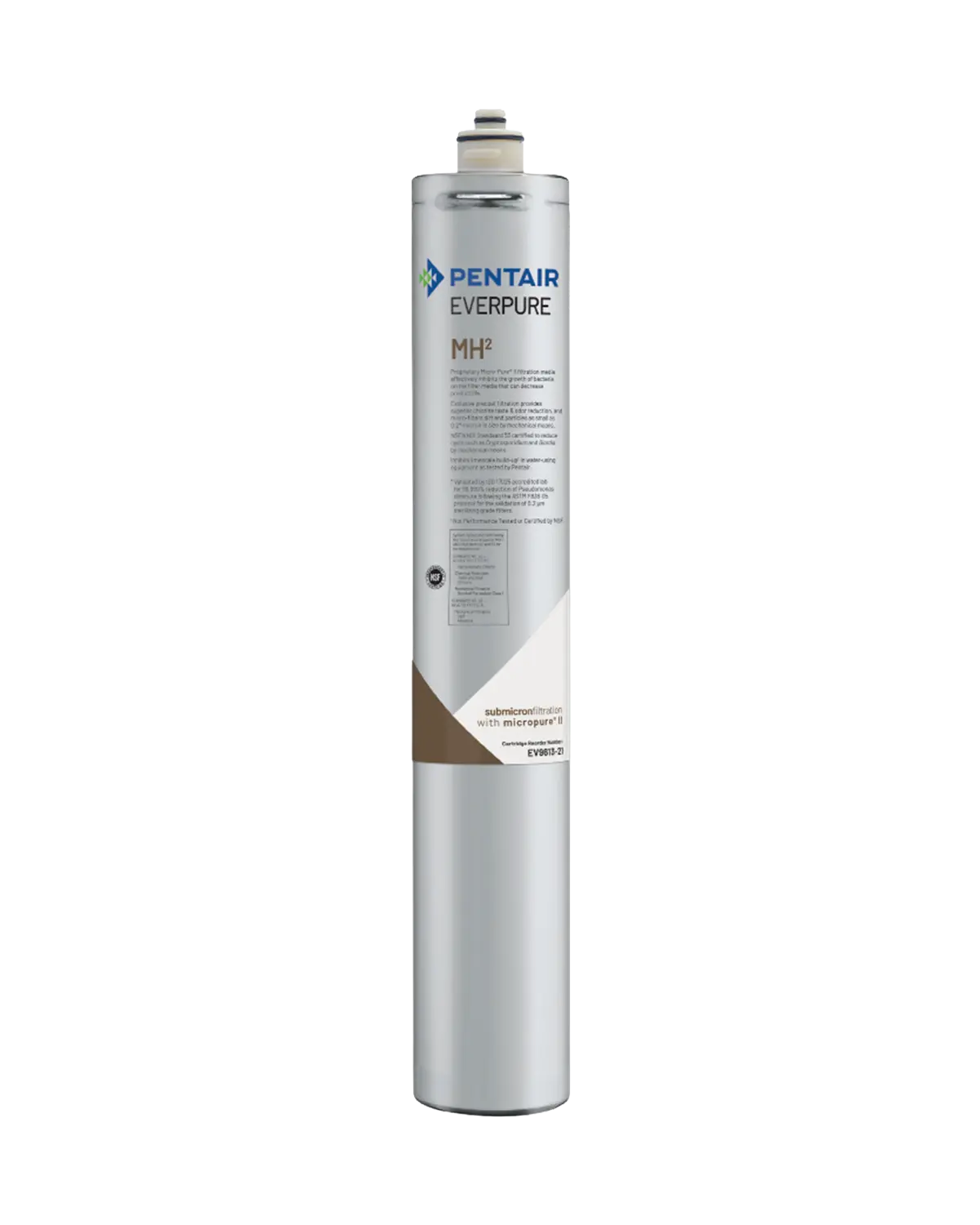
Commercial point-of-use filtration for applications where sediment, chlorine taste and odour and verified scale-control performance are relevant.
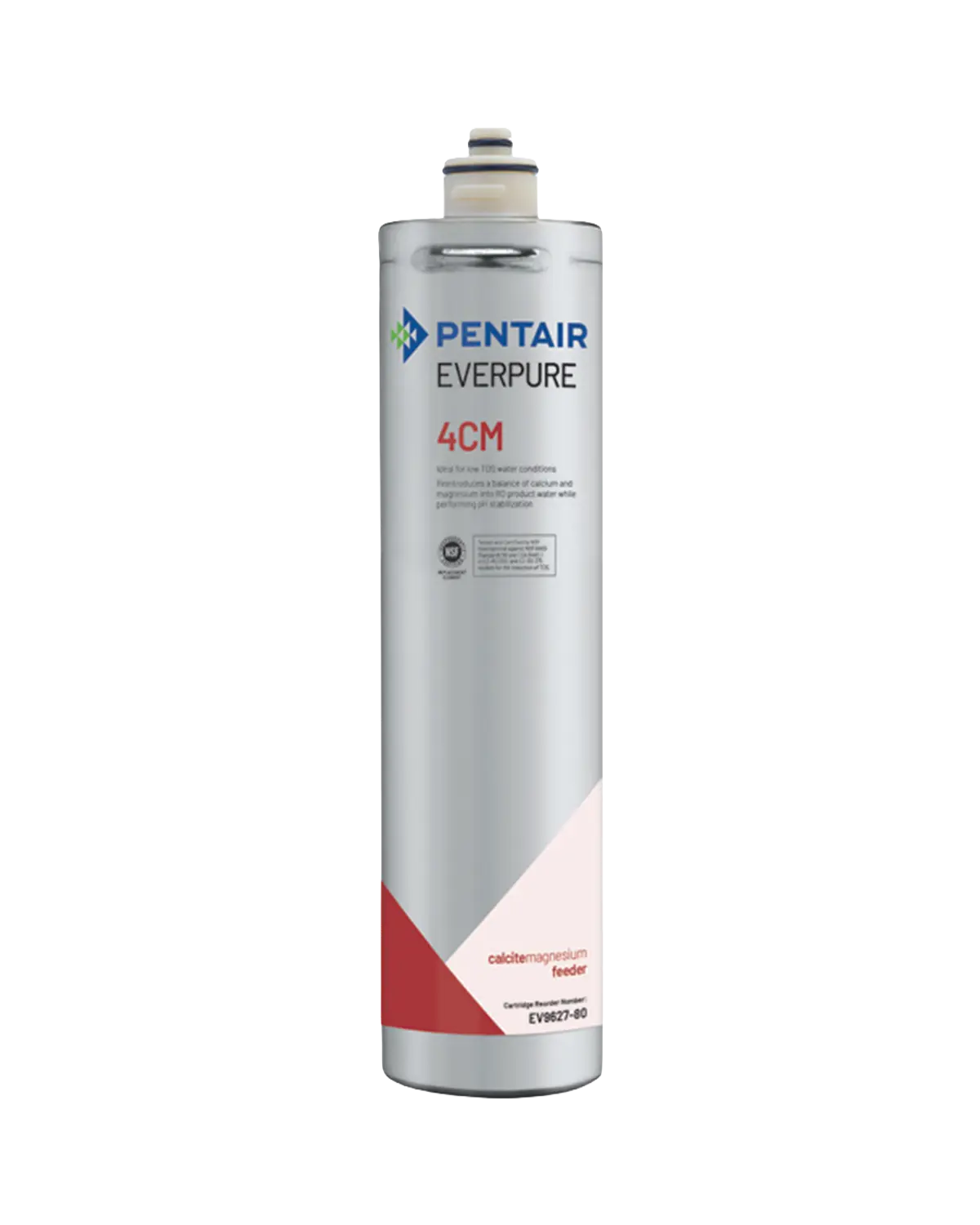
The Everpure 4CM is used after RO to add mineral content back into treated water and increase hardness for coffee applications. The RO stage is responsible for dissolved-solids reduction.

An engineered reverse-osmosis route to evaluate when testing and equipment requirements indicate that broader dissolved-solids reduction is relevant.
Select Everpure systems and cartridges are certified to specific NSF/ANSI standards. Certification and reduction claims vary by model. Product pages are the detailed technical destination; final suitability still requires assessment.
For verified point-of-use coffee filtration configurations, compact quick-change formats can support practical installation and ongoing cartridge management.
Designed for straightforward installation by a qualified plumber.
Quick-change cartridges can generally be replaced by trained site staff without specialist tools.
Compact point-of-use format designed for installation close to the connected coffee equipment.
Trained staff should follow the approved isolation, replacement, flushing and leak-check procedure for the selected system. Replacement timing depends on water quality, usage, verified cartridge capacity, operating conditions, applicable indicators and approved model guidance.
These point-of-use statements do not apply to MDRO, pre-filtration, UV or other engineered systems, which require project-specific sizing, utilities, installation and commissioning.
The assessment emphasis changes with the equipment, operating model, demand and number of locations.
Balance source-water conditions, machine guidance, beverage goals, available space and a manageable cartridge plan.
Test each source and define documented selection, installation and replacement standards while allowing for site-specific treatment.
Review multiple beverage points, operating schedules, peak demand, engineering access and lifecycle coordination.
Consider coffee demand alongside kitchen utilities, service access and source-water variation through operating hours.
Define the coffee equipment’s dedicated water needs separately from other production or drinking-water applications.
Prioritise repeatable operating procedures, peak service demand and practical cartridge-management responsibilities.
Coordinate water testing, equipment requirements, connections, isolation, drainage and service access before fit-out.
Build a location-by-location water profile and treatment schedule that reduces one source of beverage variation.
Aquainwent helps customers select and buy products. A website enquiry does not book a site visit or installation.
Tell us the application, location and any product or equipment details you know.
Our team reviews the requirement against product specifications and any available water readings.
The team can discuss direct supply or connect you with an appropriate dealer and confirm the quotation.
Confirm product availability, delivery and any separately agreed installation or service responsibilities.
Trusted by leading hospitality & foodservice brands


Trusted by 100+ premium establishments across India.
Representative brands and hospitality groups where Everpure® by Pentair solutions supplied through Aquainwent or its dealers have been deployed. Brand names and trademarks are the property of their respective owners and are used for identification purposes only.
Aquainwent LLP is listed in Pentair Asia’s official Distributor/Dealer directory for India under Commercial Filtration & Foodservice.
Concise answers for commercial coffee operators, project teams and equipment partners.
Water can influence extraction, aroma, flavour and mineral balance because brewed coffee is approximately 98% water. It can also affect how scale forms inside heated water-contact components.
There is no single universal TDS value for every coffee programme. The appropriate range depends on the machine manufacturer’s requirements, source-water chemistry, brewing method and beverage objective, so TDS should be reviewed with hardness and alkalinity rather than used alone.
No. RO is considered when testing shows broader dissolved-solids control is relevant. Many sites may need filtration or hardness management instead; final treatment depends on source water, equipment and demand.
Some systems do, but not every coffee filter changes hardness. Everpure Claris M provides adjustable carbonate-hardness treatment, while other cartridges may focus on particulate, chlorine taste and odour or scale inhibition.
Scale can form when hardness minerals in water precipitate on heated surfaces. Risk depends on water chemistry, temperature, equipment design and operating conditions, which is why hardness and alkalinity should be assessed.
Everpure Claris M uses a five-stage process that includes adjustable carbonate-hardness treatment, fine filtration and a carbon block stage for coffee, espresso and other verified hot-beverage applications.
RO reduces dissolved solids and can leave water with very low mineral content. The Everpure 4CM is used after RO to add mineral content back and increase hardness for coffee applications; the RO stage performs the dissolved-solids reduction.
Replacement depends on water quality, water usage, the cartridge’s verified rated capacity, operating conditions, pressure or flow indicators where applicable, and the approved replacement guidance for the selected model.
Quick-change cartridges can generally be replaced by trained site staff without specialist tools. Staff should follow the approved isolation, replacement, flushing and leak-check procedure.
Verified point-of-use coffee filtration is designed for straightforward installation by a qualified plumber. Site conditions, pressure, connections, isolation, flushing and service access must still be checked.
The right treatment is selected after reviewing source water, TDS, hardness, alkalinity, chlorine, particulate, machine requirements, daily demand, peak flow and installation conditions.
Test and assess each source water, then apply a documented treatment and cartridge-management plan. More consistent treated-water quality helps reduce one source of beverage variation across multiple locations.
Ask about a listed product or share your requirement. Our team will review the enquiry and discuss direct supply or an appropriate dealer contact.