
Hardness-scale deposits
Calcium- and magnesium-related deposits can accumulate in plumbing and water-using equipment under scale-forming conditions.
Aquainwent helps commercial operators select the appropriate Pentair water-softening solution from measured hardness, daily demand, peak flow, downstream applications, regeneration requirements and installation conditions.
Water softening reduces calcium and magnesium hardness. It changes ionic composition and does not perform broad dissolved-solids reduction like reverse osmosis.
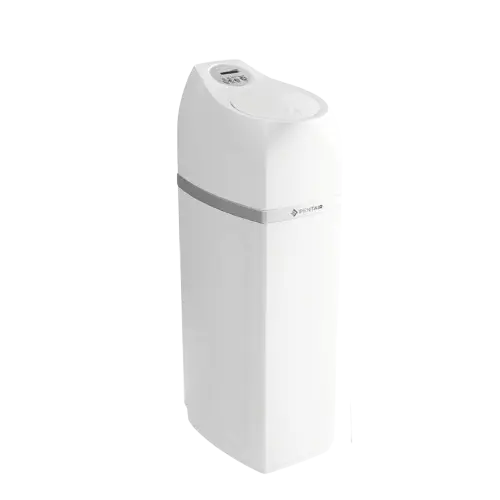
Hard water contains dissolved calcium and magnesium. When water is heated, concentrated or evaporated, these hardness minerals can contribute to deposits on downstream surfaces.
Hardness is a specific calcium-and-magnesium measure. It is not the same as TDS, and a hardness result should be interpreted with the water source, equipment specification and operating conditions.
Calcium- and magnesium-related deposits can accumulate in plumbing and water-using equipment under scale-forming conditions.
Boilers, heaters and steam equipment can concentrate scale-forming conditions and require water matched to the OEM specification.
Hardness can contribute to deposits, while final glassware and ware appearance also depends on TDS, chemistry, temperature, drying and calibration.
Reducing hardness-scale accumulation can help support designed heat-transfer performance and reduce scale-related maintenance requirements.
A commercial water softener passes water through an ion-exchange resin bed. Calcium and magnesium ions are exchanged for sodium ions, and regeneration restores the resin’s exchange capacity.
Source water containing calcium and magnesium reaches the correctly sized softener after any required upstream treatment.
The resin exchanges hardness ions for sodium ions. This is a chemical exchange process, not particulate filtration.
Reduced calcium and magnesium hardness lowers hardness-scale potential where softened water suits the downstream application.
Brine is used to restore exchange capacity after the programmed usage or operating trigger. Salt, drain and service planning remain necessary.
Softening targets calcium and magnesium hardness. Broad dissolved-solids reduction, particulate or chlorine treatment and microbiological control require appropriately selected treatment stages.
A site can have significant hardness, high TDS, both or neither. Treatment should follow the measured water problem and the final application requirement.
| Question | Hardness | TDS |
|---|---|---|
| What does it describe? | Primarily calcium and magnesium-related concentration. | A broader measure of dissolved ionic content. |
| What treatment is central here? | Sodium-cycle ion-exchange softening reduces calcium and magnesium hardness. | Reverse osmosis can reduce a broad range of dissolved ions and solids. |
| What changes after softening? | Calcium and magnesium hardness is reduced. | Ionic composition changes, but softening does not broadly lower TDS like RO. |
| What should guide selection? | Measured hardness, exchange load, flow, regeneration and endpoint requirements. | Full water chemistry and the downstream treated-water specification. |
Hardness reduction can support appropriate downstream applications, but it does not guarantee every surface or piece of equipment will be deposit-free.
Hardness reduction can reduce hardness-scale potential where softened water aligns with the boiler or heater specification.
Softening can reduce hardness-related deposits, but rinse chemistry, TDS, temperatures, drying and machine calibration still affect results.
Use softened water only where it meets the exact equipment manufacturer’s feed-water specification.
Hardness-related deposits can affect wetted surfaces under suitable scale-forming conditions; source chemistry and operation remain relevant.
Hardness may be relevant where the laundry process and equipment specification call for softened water. No detergent or cost-saving percentage is assumed.
Central softening can serve multiple endpoints where each application accepts the selected residual hardness and hydraulic design.
Municipal, borewell, tanker, blended or already treated water—and whether conditions vary through the year.
Calcium and magnesium load entering the softener, normally established by an appropriate water test.
Total treated volume required across the operating day and the time available between regeneration events.
Maximum instantaneous demand when multiple fixtures or pieces of equipment call for water together.
Boilers, warewashing, steam, coffee, drinking-water and other endpoints can require different final water specifications.
Application-specific output requirement where applicable; zero hardness is not assumed for every endpoint.
Available inlet pressure and the hydraulic constraint through the selected system at operating flow.
Frequency, reserve capacity and whether the operation can tolerate a regeneration window or requires an alternate architecture.
Inlet/outlet plumbing, bypass, drain, overflow where applicable, electrical supply and commissioning requirements.
System footprint, brine tank position, salt-refill access and clearances for inspection and maintenance.
Upstream sediment, iron, chlorine or other treatment and its effect on softener feed-water suitability.
Check the current Pentair product specification for the selected SKU before final system selection.
Sizing connects hardness load and exchange capacity with daily volume, peak hydraulic demand, regeneration planning, reserve and the downstream water requirement.
Measured calcium and magnesium concentration determines how quickly exchange capacity is used.
Daily softened-water requirement helps establish the capacity needed between regenerations.
Combined busy-period demand must remain within the selected system’s hydraulic capability.
Resin volume is one input, together with the specific resin, salt setting, operating conditions and target output.
How often the exhausted exchange capacity must be restored under the site’s actual load.
A design margin used so the system does not exhaust unexpectedly before the planned regeneration point.
The hydraulic loss through the system must be acceptable at the real peak service flow.
Continuity requirements affect system architecture and cannot be inferred from automatic regeneration alone.
MINI, MIDI and MAXI are Aquainwent’s customer-facing labels. PWCE16P12, PWCE35P12 and PWCE54P12 are the primary Pentair technical identifiers.
The lowest published resin volume and service flow in the three-model HydraSmart family. Site fit still depends on hardness load, peak flow and regeneration planning.
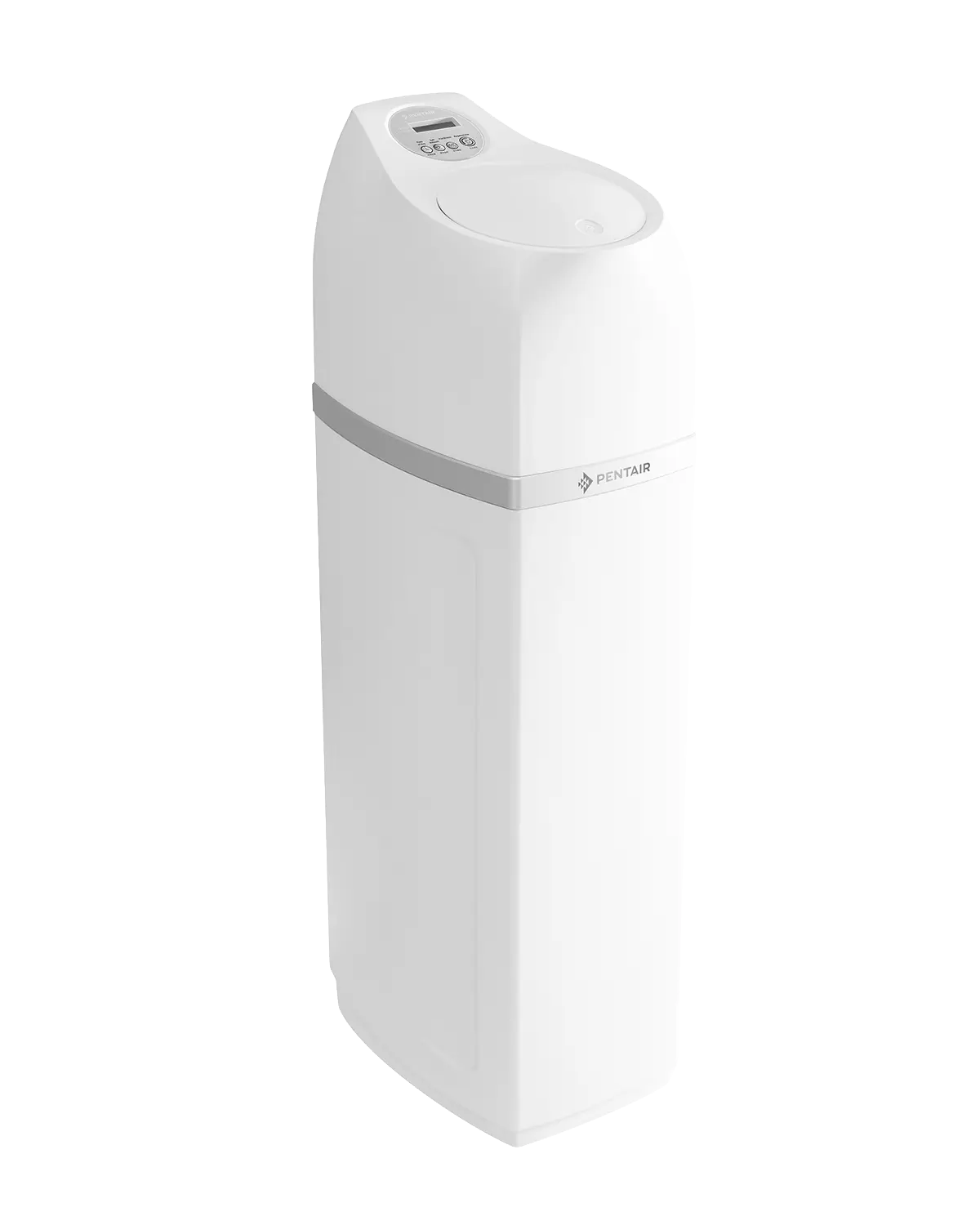
An intermediate published resin volume and service flow within HydraSmart. The label does not establish suitability without the site’s hydraulic and exchange load.
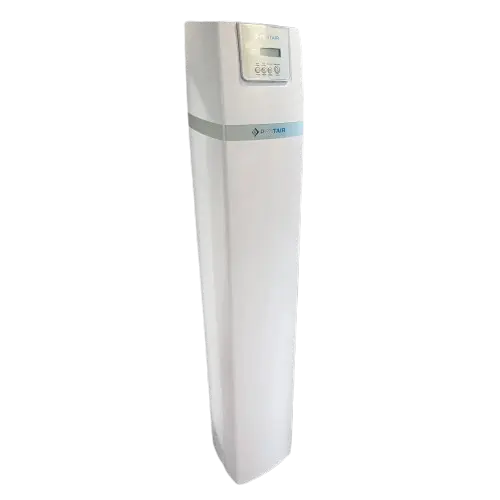
Within HydraSmart, PWCE54P12 provides the highest published resin volume and service flow of the three models. Exact layout must still be confirmed for the project.
Published model values support comparison; they do not replace hardness-load calculations, peak-flow review, regeneration planning or installation checks.
The exact Pentair SKU remains the technical identifier. Unverified controller details and unresolved feed-water limits are not included.
| Specification | MINI | MIDI | MAXI |
|---|---|---|---|
| Pentair SKU | PWCE16P12 | PWCE35P12 | PWCE54P12 |
| Resin volume | 12 L | 30 L | 40 L |
| Published service flow | 1.1 m³/h | 2.0 m³/h | 3.0 m³/h |
| Inlet / outlet | 1" BSP | 1" BSP | 1" BSP |
| Operating pressure | 20–50 psi | 20–50 psi | 20–50 psi |
| Water temperature | 4–38°C | 4–38°C | 4–38°C |
| Electrical | 220 V / 50 Hz · 6 W | 220 V / 50 Hz · 6 W | 220 V / 50 Hz · 6 W |
| Drain | 1/2" | 1/2" | 1/2" |
| Published dimensions | 532 × 314 × 739 mm | 532 × 314 × 1230 mm | Confirm the current main-unit and salt-tank drawing before installation. |
Feed-water suitability must be checked against the current Pentair specification for the selected SKU. No unverified hardness, iron or turbidity limit is assumed here.
PW AutoSoft 1354 and 1665 combine a commercial vessel, automatic control valve and separate brine arrangement. They are not presented as simple next sizes after HydraSmart.

A conventional commercial configuration using a 1354 tank with Pentair 5600SXT control. Final fit depends on hardness, flow, exchange load and site services.

A conventional commercial configuration using a 1665 tank with Pentair 5800SXT control. Higher published flow or media volume alone does not establish site fit.
Published flow includes the stated 15 psi pressure-drop condition. Recommended media and brine volumes are configuration data, not daily capacity guarantees.
| Specification | PW AutoSoft 1354 | PW AutoSoft 1665 |
|---|---|---|
| Part number | 10387-SYS | 10390-SYS |
| Tank / valve | 1354 tank with 5600SXT | 1665 tank with 5800SXT |
| Published flow | 2.5 m³/h at 15 psi pressure drop | 4.0 m³/h at 15 psi pressure drop |
| Recommended media volume | 50 L | 125 L |
| Connection | 1" BSPF | 1" BSPF |
| Operating pressure | 2–6 bar | 2–6 bar |
| Brine tank | 100 L | 200 L |
| Controller supply | 24 V AC | 12 V DC |
| Regeneration | Flow & time based | Flow & time based |
The families use different form factors and commercial configurations. Selection depends on the complete water, demand, regeneration and installation requirement—not a linear five-step size ladder.
Model-specific softener configurations identified by PWCE16P12, PWCE35P12 and PWCE54P12.
Tank, control-valve and brine arrangements identified by parts 10387-SYS and 10390-SYS.
A higher resin or media volume does not automatically make one product “better.” Incoming hardness, peak flow, reserve, regeneration frequency, continuity, pressure and space must be resolved together.
Regeneration restores ion-exchange capacity and reduces routine manual intervention, but service continuity depends on the installed architecture.
Managed according to water usage and programmed operating settings. Salt replenishment, inspection and service planning still remain.
During regeneration, that vessel is not providing normal softened-water service. The installation may bypass hard water or interrupt availability.
Where specifically engineered, one vessel can remain in service while another regenerates. No listed model is assumed to provide this architecture.
If uninterrupted softened-water availability is operationally critical, state that requirement before equipment selection so the system architecture, reserve and control strategy can be designed accordingly.
These treatments are not interchangeable. A complete water-treatment train may use more than one stage, with each stage selected for a defined water problem.
Ion exchange reduces calcium and magnesium hardness.
Addresses documented particulate, chlorine or other targets according to the selected media.
Helps control scale precipitation without necessarily removing calcium and magnesium hardness.
A membrane process that reduces a broader range of dissolved ions and solids.
A separate treatment consideration where microbiological control is required.
Central softening can reduce hardness supplied to multiple downstream endpoints where softened water is appropriate for those applications. Every endpoint’s final specification still applies.
Review central demand, laundry, hot water, kitchen endpoints, peak occupancy and regeneration continuity together.
Assess the whole equipment schedule rather than assuming one residual-hardness target for every appliance.
Hardness reduction may reduce hardness-scale potential where the boiler specification accepts softened water.
Can reduce hardness-related deposits; final ware appearance still depends on TDS, chemistry, temperature, drying and machine calibration.
Use only where it aligns with the exact equipment manufacturer’s feed-water limits.
Zero-hardness water is not automatically ideal; mineral content and alkalinity should suit the equipment and beverage programme.
Softening changes ionic composition. It is not disinfection, reverse osmosis or universal potability treatment.
May be relevant where process and equipment requirements support hardness reduction; no fixed savings percentage is assumed.
Commercial softeners are central or engineered systems. Installation should be completed by a qualified plumber or technician according to the selected system’s approved instructions.
Confirm inlet/outlet connections, pressure, bypass, drain, overflow where applicable, electrical supply, service clearances and commissioning.
Plan the brine tank, refill route, salt storage, drain, overflow where applicable and safe service access around the selected configuration.
Review salt level, regeneration, valve/controller condition, resin performance and the brine/drain system according to actual water and usage.
Aquainwent helps customers select and buy products. A website enquiry does not book a site visit or installation.
Tell us the application, location and any product or equipment details you know.
Our team reviews the requirement against product specifications and any available water readings.
The team can discuss direct supply or connect you with an appropriate dealer and confirm the quotation.
Confirm product availability, delivery and any separately agreed installation or service responsibilities.
Trusted by leading hospitality & foodservice brands


Starbucks · McDonald’s · Marriott · Taj · Hilton · Oberoi · Fairmont · Westin · Barclays · KKR — and 100+ premium establishments across India.
Representative brands and hospitality groups where Everpure® by Pentair solutions supplied through Aquainwent or its dealers have been deployed. Brand names and trademarks are the property of their respective owners and are used for identification only. Logo presence does not imply endorsement or use of a specific water-softener model or configuration.
Aquainwent LLP is listed in Pentair Asia’s official Distributor/Dealer directory for India under Commercial Filtration & Foodservice.
Technically disciplined answers for commercial operators, engineering teams, consultants, procurement teams and project partners.
A sodium-cycle ion-exchange softener reduces calcium and magnesium hardness by exchanging those ions for sodium ions. This lowers hardness-scale potential but does not make the system a purifier, disinfectant or reverse-osmosis system.
Hardness refers mainly to calcium and magnesium. TDS is a broader measure of dissolved ionic content. Water can have significant hardness, high TDS, both or neither, so treatment should be selected for the measured water problem.
No. Softening changes ionic composition by exchanging calcium and magnesium for sodium. Reverse osmosis reduces a broader range of dissolved ions and solids.
No. Reducing calcium and magnesium lowers hardness-scale potential, but deposits can also involve silica, iron, other dissolved constituents, concentration, temperature and equipment operating conditions.
Sizing considers incoming hardness, daily softened-water demand, peak simultaneous flow, resin or exchange capacity, reserve capacity, regeneration frequency, residual-hardness needs, pressure drop, downstream equipment and site utilities.
Daily demand helps determine the exchange capacity needed between regenerations. Peak service flow is the maximum instantaneous demand. A system can have enough daily capacity but still be hydraulically undersized for simultaneous use.
HydraSmart is a Pentair water-softener family. Aquainwent uses MINI, MIDI and MAXI as customer-facing labels mapped respectively to PWCE16P12, PWCE35P12 and PWCE54P12.
Their published resin volumes and service flows are 12 L and 1.1 m³/h, 30 L and 2.0 m³/h, and 40 L and 3.0 m³/h respectively. These figures support comparison, but selection must also consider hardness load, peak flow, daily demand, regeneration and installation conditions.
HydraSmart and PW AutoSoft represent different softener formats. PW AutoSoft uses a conventional commercial tank, control-valve and brine configuration. Neither format is categorically better; the correct choice depends on water conditions, hydraulic demand, regeneration needs, space and installation architecture.
No. During regeneration, a single service vessel is not providing normal softened-water service. Depending on system design, the installation may bypass hard water or interrupt softened-water availability. Uninterrupted supply requires an architecture specifically selected for that requirement.
No. A softener addresses calcium and magnesium hardness. Particulate or carbon filtration, reverse osmosis and UV address different concerns and must be selected according to the actual water condition and intended use.
It may reduce hardness supplied to multiple endpoints when combined peak flow, daily demand, piping and regeneration timing are correctly engineered. Each boiler, dishwasher, oven, coffee machine or other endpoint must still meet its own water specification.
Suitability depends on the exact equipment specification. Softening can reduce hardness-related deposits, but it does not guarantee spot-free warewashing. Coffee may require controlled mineral content and alkalinity, and combi ovens must follow the OEM feed-water requirements.
Planning normally includes plumbing connections, pressure, bypass, drain, electrical supply, brine or salt access, overflow where applicable, service clearance and commissioning. Ongoing needs include salt replenishment and periodic checks of regeneration, the valve or controller, resin performance and the brine and drain system; frequency depends on site conditions and use.
Ask about a listed product or share your requirement. Our team will review the enquiry and discuss direct supply or an appropriate dealer contact.